


Customs Clearance in Brisbane: Step-by-Step Process, Costs & Timeframes (2026 Guide)
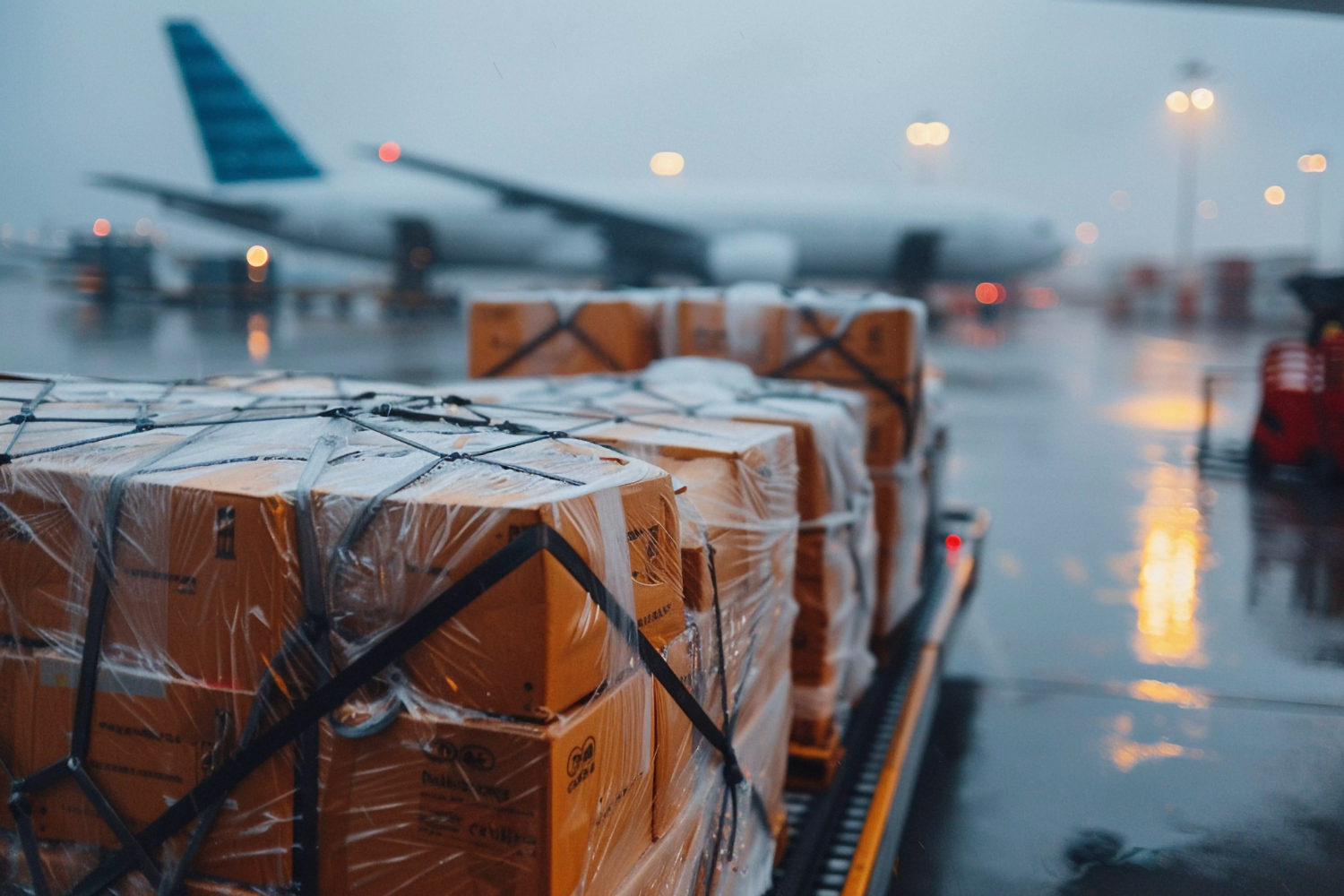
Your goods have landed at the Port of Brisbane or Brisbane Airport. Before you can collect them, they need to clear customs — and that is where many first-time importers get caught out by missing paperwork, unexpected charges or a biosecurity hold.
This guide walks through how customs clearance in Brisbane actually works: what happens at each step, what it costs, how long it takes, and what you can do to keep your shipment moving — especially in the busy lead-up to Christmas.
What Is Customs Clearance?
Customs clearance is the process of getting imported goods legally released by the Australian Border Force (ABF). It involves declaring what you are importing, paying any duty and GST owed, and meeting biosecurity requirements set by the Department of Agriculture, Fisheries and Forestry (DAFF). Until your goods are cleared, they cannot leave the port, airport or depot.
Most businesses use a licensed customs broker to handle this. A broker lodges the declaration on your behalf through the ABF’s Integrated Cargo System, classifies your goods correctly and manages any questions from Border Force or biosecurity officers.
Do All Imports Need Formal Clearance?
No. The key figure is AUD $1,000.
- Goods valued at $1,000 or less are generally cleared through a simpler Self-Assessed Clearance (SAC) declaration, and duty and GST are usually not collected at the border. Alcohol and tobacco are exceptions.
- Goods valued over $1,000 require a Full Import Declaration (FID). This is where duty, GST and government charges apply — and where a customs broker earns their keep.
Most commercial shipments by sea freight or air freight sit well above the $1,000 threshold, so a Full Import Declaration is the norm for Brisbane businesses.
The Customs Clearance Process, Step by Step
1. Gather your shipping documents
Clearance starts before your goods arrive. Your broker will typically need:
- Commercial invoice — showing the seller, buyer, goods description, quantity, value and currency
- Packing list — what is in each carton or pallet
- Bill of lading (sea) or air waybill (air) — the transport document
- Packing declaration — required for sea freight containers, covering timber packaging and container cleanliness
- Certificate of origin — if you want to claim a reduced duty rate under a Free Trade Agreement
- Any permits or treatment certificates your goods require
Incomplete or inconsistent documents are the single most common cause of clearance delays.
2. Classify the goods and calculate duty
Every product has a tariff classification code that determines its duty rate. Many general goods attract a 5% customs duty, but plenty of products are duty-free, and goods from countries with a Free Trade Agreement — such as China, Japan, Korea and most of South-East Asia — may qualify for reduced or zero duty with the right origin documents. Getting the classification right matters: the wrong code can mean overpaying, or underpaying and facing penalties later.
3. Lodge the Full Import Declaration
Your customs broker lodges the import declaration electronically with the ABF. The ABF then assesses the declaration, and the amounts owing are confirmed.
4. Pay duty, GST and charges (unless exempted)
Once payment is made, the ABF can release the goods from a customs perspective. GST-registered businesses may be able to defer import GST to their BAS under the Deferred GST scheme, which helps cash flow — ask your broker or accountant whether you are eligible.
5. Clear biosecurity
DAFF assesses every Full Import Declaration for biosecurity risk. Some goods are released straight away. Others are directed for a document check, inspection, fumigation or other treatment — common for timber, food, plant material, used machinery and anything with soil or organic contamination risk.
6. Release and delivery
When customs and biosecurity have both cleared the shipment, the goods are released and can be collected or delivered. If you use a freight forwarder that also handles clearance, this handover happens without you needing to coordinate separate providers.
What Does Customs Clearance Cost in Brisbane?
Clearance costs fall into two buckets: government charges, which are the same no matter who you use, and your broker’s professional fee.
Government charges
- Customs duty — based on your goods’ classification and origin; commonly 5% of the customs value for general goods, or 0% where duty-free or covered by a Free Trade Agreement
- GST — 10% of the value of the taxable importation, which includes the customs value, duty, and international freight and insurance
- Import Processing Charge — for an electronic declaration, $50 for consignments over $1,000 and under $10,000, and $152 for consignments of $10,000 or more (ABF Import Processing Charges)
- Biosecurity cost recovery charge — from 1 July 2026, $48 for air cargo and $71 for sea cargo on Full Import Declarations
- Inspection or treatment fees — only if DAFF directs your goods for inspection or treatment
Broker fees
Customs brokers charge a professional fee for preparing and lodging your declaration, with extra costs where permits, biosecurity bookings or complex classifications are involved. Ask for an itemised quote so you can see exactly what is a government charge and what is a service fee.
How Long Does Customs Clearance Take?
When documents are complete and accurate and no biosecurity intervention is needed, clearance can often be finalised quickly — sometimes before the goods have even been unloaded. The timeframe stretches when:
- Documents are missing, unclear or inconsistent with each other
- Goods are selected for a biosecurity inspection or treatment
- The ABF asks for more information about value or classification
- Permits for regulated goods have not been organised in advance
The best way to shorten clearance is to send your broker documents before the goods arrive, not after.
Importing for Christmas? Plan Your Clearance Now
The run-up to Christmas is traditionally one of the busiest times of year for Australian importers. Retail stock, gifts and seasonal products all compete for vessel space, wharf slots, biosecurity inspections and transport bookings — and any document problem costs more time than usual.
If your stock needs to be on shelves before Christmas:
- Lock in bookings early — confirm shipping dates with your supplier and forwarder now
- Get documents to your broker early — commercial invoice, packing list and packing declaration as soon as the goods ship
- Check for biosecurity risk — timber pallets, natural materials and food products are more likely to be inspected
- Build in a buffer — allow extra time for congestion rather than planning around best-case transit
- Consider air freight for urgent lines — for high-value or time-critical stock, flying part of the order can save the season
Importing from Asia this quarter? Our guide to importing from China and South-East Asia to Brisbane covers the sea freight side in more detail.
Common Customs Clearance Mistakes to Avoid
- Undervaluing goods on the commercial invoice — the ABF can reassess and apply penalties
- Missing the packing declaration on sea freight containers, which triggers biosecurity holds
- Not claiming Free Trade Agreement rates because there is no valid certificate or declaration of origin
- Using untreated timber packaging that does not meet Australian requirements
- Waiting until the goods arrive to start the paperwork
Why Use a Brisbane Customs Broker?
A licensed customs broker in Brisbane knows the local port, airport, depots and biosecurity processes, and can deal directly with the ABF and DAFF when questions arise. At Deacon Customs & Logistics, we combine customs brokerage with freight forwarding, so your shipment is managed from pickup to delivery — one team, one point of contact, no hand-offs between providers.
Customs Clearance Brisbane: FAQs
Do I need a customs broker to clear goods in Brisbane?
It is not legally required, but most businesses use a licensed customs broker for imports over $1,000 because Full Import Declarations involve tariff classification, valuation and biosecurity requirements that are easy to get wrong.
What is the difference between a customs broker and a customs clearance agent?
The terms are often used interchangeably. In Australia, a licensed customs broker is accredited by the ABF to lodge import declarations on your behalf and is accountable for their accuracy.
How much duty will I pay on my imports?
It depends on what the goods are and where they come from. Many general goods attract 5% duty, but many are duty-free or eligible for reduced rates under a Free Trade Agreement. GST of 10% also applies to most imports over $1,000.
Why is my shipment held by biosecurity?
Common reasons include timber packaging, food or plant material, missing packing declarations, or goods that need a treatment certificate. Your broker can tell you what is needed to have the hold released.
Can customs clearance start before my goods arrive?
Yes. Lodging documents early is the best way to reduce clearance time, and in many cases the declaration can be processed before the goods are unloaded.
Get Your Goods Cleared Without the Hassle
Whether it is a single pallet or a regular container program, Deacon Customs & Logistics handles customs clearance in Brisbane from start to finish — documents, duty, biosecurity and delivery.


